VisCardia
visONE

Cardiac Diaphragm Support

The heart has a partner

VisONE™ Synchronized Diaphragmatic Stimulation addresses the therapeutic gap for HFrEF patients who remain symptomatic despite GDMT — without placing any hardware in the heart.

Active elderly couple jumping on a trampoline in a sunny backyard

Filling the gap between GDMT and LVAD

Many patients with HFrEF remain symptomatic and at high risk despite optimized GDMT, and most — those with a narrow QRS — are not candidates for CRT. VisONE SDS is designed to address this gap with a non-cardiothoracic, minimally invasive approach.1-3

Heart failure symptom improvements

Demonstrated Significant Improvements In Heart Failure Symptoms4-7

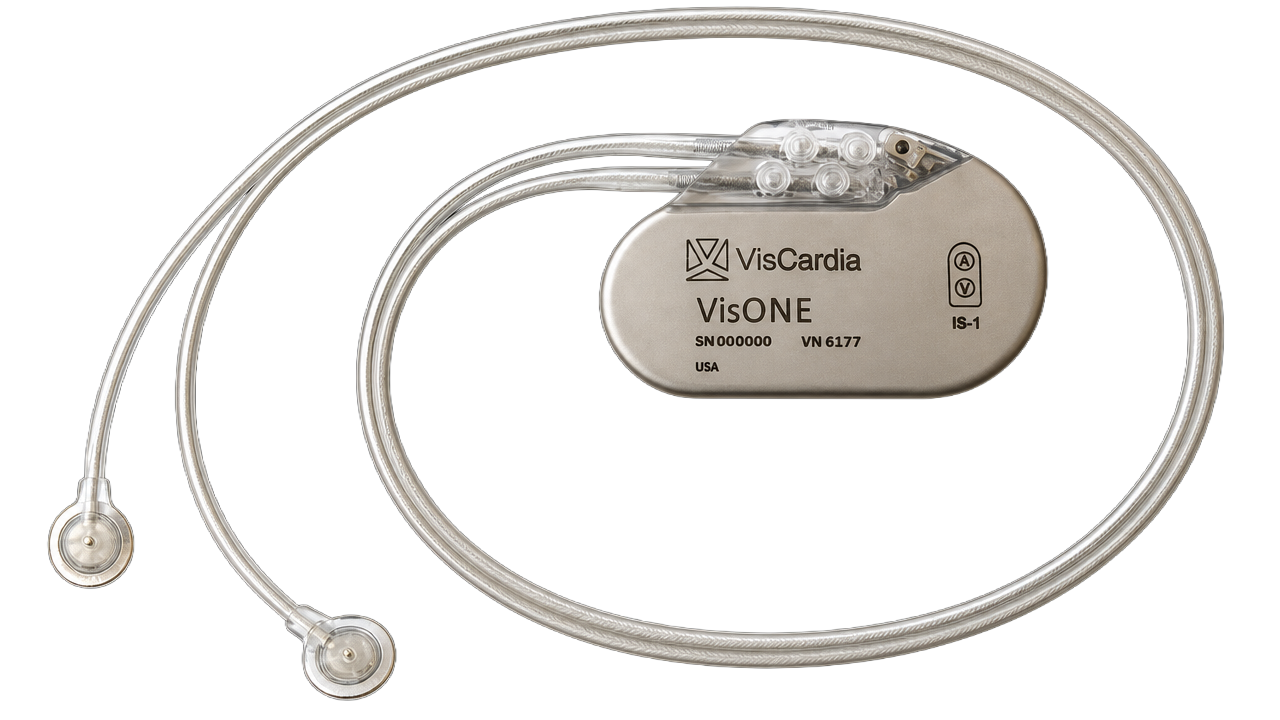
VisONE product

Precisely timed diaphragmatic stimulation synchronized with the cardiac cycle — reduces intrathoracic pressure, augments cardiac output.4,8

Minimally invasive hospital procedure

Minimally Invasive Non-Cardiothoracic Laparoscopic Procedure4-7

Clinical trial enrollment

FDA Breakthrough Device Designation. IDE pivotal trial RECOVER-HF actively enrolling. NCT06552637.

Mechanism of Action

See how VisONE™ delivers precisely timed diaphragmatic stimulation synchronized with the cardiac cycle.

For healthcare professionals. Illustrative purposes only.

VisONE is a simple laparoscopic implant

During a minimally invasive laparoscopic procedure two leads are attached to the underside of the diaphragm. The leads provide electrical stimulation to a small section of the diaphragm muscle in synch with the cardiac cycle. The implantable pulse generator is implanted subcutaneously into the abdomen.

No hardware implanted in the heart

Nothing is implanted in the heart.

Minimally invasive abdominal incisions

Minimal scarring, two small incisions in your abdomen to place the device.10

Comfortable stimulation patients do not feel

The stimulation is small, patients don't feel it.4,5,10

X-ray illustration of VisONE implant with leads
Patient positioning and trocar setup showing camera port, working port, and IPG pocket
VisONE active fixation lead

Active Fixation Lead

VisONE implantable pulse generator

Implantable Pulse Generator

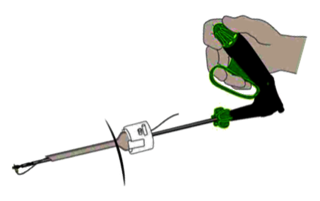
VisONE lead placement tool

Lead Placement Tool

Clinical development

Extensive Feasibility and Clinical Studies Across 150 Patients

No Procedure, Therapy Or Device Related MARCE/AEs To Date

Phase 01

Animal Model

40patients
Ref. 10
Phase 02

Feasibility / POC

101patients
Ref. 12-14
Phase 03

First-in-Human

19patients
Ref. 4, 5
Phase 04

VisONE IDE Pilot

35patients
Ref. 6, 7

IDE Pilot Demonstrated Improvement Across Critical HF Symptoms at 6 months6*

Chart style

Functional Capacity and Quality of Life

Change vs. control

+61 m

0
20
40
60
80
64
3

p < 0.01

6MWTD (m)

Control (N=14)SDS (N=15)

Lower is better

Change vs. control

8 pt improvement

0
-5
-10
-15
-20
-8
-16

p < 0.05

MLHFQ (au)

Control (N=15)SDS (N=15)

Left Ventricular Systolic Performance

Lower is better

Change vs. control

7% improvement

7%
4%
0%
-4%
-7%
1%
-6%

p = ns

LVESV (%)

Control (N=15)SDS (N=11)

Change vs. control

3.9% improvement

0%
1%
3%
4%
5%
4.4%
0.5%

p = ns

EF (%)

Control (N=15)SDS (N=11)

Change vs. control

+1.4 L/min

1.5
1
0
-1
-1.5
1.3
-0.1

p < 0.01

LVCO (L/min)

Control (N=15)SDS (N=11)

Therapy patients showed durable improvements at 12 months7**

SDS group vs. baseline

6MWTD (m)+102 mp < 0.001
MLHFQ (au)20 pt improvementp < 0.01
LVESV (%)9% improvementp = ns
EF (%)+6.2%p < 0.05
LVCO (L/min)11+1.6p < 0.01

* Study not powered for significance.

** Compared to baseline.

NowEnrolling

RECOVER-HF

IDE Pivotal Trial

Prospective, multi-center, double-blinded, sham controlled randomized safety and efficacy trial. ClinicalTrials.gov NCT06552637

Patient Population

NYHA II/IIIEF ≤40%QRSd ≤130mson GDMT

Primary Endpoints

  • 01% Left Ventricular End-systolic Volume
  • 026-minute Walk Test
  • 03Quality of Life
  • 04Safety (70% Freedom from MARCE)

Secondary Endpoints

  • 01Left Ventricle Ejection Fraction
  • 02NT-proBNP

References

  1. 1Heidenreich, Paul A et al. “2022 AHA/ACC/HFSA Guideline for the Management of Heart Failure” Circulation vol. 145,18 (2022): e895-e1032.
  2. 2Gaggin, HK et al. European Heart Journal, Volume 46, Issue Supplement_1, November 2025.
  3. 3Greene, Stephen J et al. JAMA cardiology vol. 11,3 (2026): 293-297.
  4. 4Fudim, Marat et al. JACC. Basic to translational science vol. 7,3 322-323. 4 Apr. 2022.
  5. 5Jorbenadze A et al. (2022) Struct Heart. 6(6):100103.
  6. 6Fudim M et al. (2025) RECOVER-HF Pilot Study: synchronized diaphragmatic stimulation for HFrEF therapy. Presented at THT
  7. 7Fudim M et al. (2026) Beyond the Heart and Nerves: Diaphragmatic Stimulation for HFrEF. Presented at THT
  8. 8Goldberg, L R et al. Heart failure reviews vol. 30,5 (2025): 1035-1043.
  9. 9Salah, Husam M et al. Journal of the American College of Cardiology vol. 80,17 (2022): 1647-1659.
  10. 10Goldberg, L R et al. ESC heart failure vol. 9,3 (2022): 1677-1681.
  11. 11Data on file VisCardia
  12. 12Zuber, M et al. Congestive heart failure (Greenwich, Conn.) vol. 16,4 (2010): 147-52.
  13. 13Beeler, R et al. European journal of heart failure vol. 16,3 (2014): 342-9.
  14. 14Roos, M et al. Europace : European pacing, arrhythmias, and cardiac electrophysiology vol. 11,2 (2009): 191-9.